

the reading:
On that day you will ask nothing of me. Very truly, I tell you, if you ask anything of the Father in my name, he will give it to you. Until now you have not asked for anything in my name. Ask and you will receive, so that your joy may be complete.
“I have said these things to you in figures of speech. The hour is coming when I will no longer speak to you in figures but will tell you plainly of the Father. On that day you will ask in my name. I do not say to you that I will ask the Father on your behalf, for the Father himself loves you because you have loved me and have believed that I came from God. I came from the Father and have come into the world; again, I am leaving the world and am going to the Father.”
His disciples said, “Yes, now you are speaking plainly, not in any figure of speech! Now we know that you know all things and do not need to have anyone question you; by this we believe that you came from God.” Jesus answered them, “Do you now believe? The hour is coming, indeed it has come, when you will be scattered, each one to his home, and you will leave me alone. Yet I am not alone because the Father is with me. I have said this to you so that in me you may have peace. In the world you face persecution, but take courage: I have conquered the world!”
the sermon:
Welcome, and Happy Rogation Day!
I know that you’ve probably had this day marked on your calendar as a big one, up there with Christmas and Easter.
No?
Yeah… most of us didn’t grow up with Rogation Sunday on our calendars. But the tradition points at something we all desperately need.
It comes from the Latin rogare (roh-GAH-reh), which simply means “to ask,” maybe with a hint of “to beg.” And this Sunday, the whole arc of the lectionary is moving us to think honestly about what it means to ask God for anything at all.
If we’re honest, most of us have a complicated relationship with prayer.
We believe in it.
But, we’re not always sure it works.
We do it, and then feel guilty that we don’t do it more, or more faithfully, or with more confidence.
What does Jesus actually mean when he says, “ask, and you will receive?”
the invitation
This is the very question Jesus answers in our Gospel reading for today.
Let me set the stage first. It’s the evening of the Last Supper, just hours before he’s betrayed, arrested, and crucified. He’s well aware that this is His last opportunity to prepare the disciples on what life looks like after He’s gone.
And it’s in that moment, these final instructions, that He gives His closest friends the most intimate gift He can… direct access to the Father.
Ask in my name.
Ask and receive.
That your joy may be full.
That term “in my name,” in the original language is en tō onomati mou. And it’s not about a formula to get whatever you’re asking for. It’s more about a relational union with who Jesus is. To ask in his name is to ask in alignment with his character and will.
So it’s not a “me” request, like “Father, please let me win the Powerball this week, and I promise to give 10% to the church. In Jesus’ name!”
And there’s nothing wrong with asking for things, what we call a petition. But it really only makes sense when adoration and surrender come first. Prayer makes most sense when it begins with orientation towards the One who is already our peace.
Thomas Merton once wrote,
“The value of our prayer is not to be measured by the feelings it produces in us… [but] is to be found in the fact that it is an orientation of our whole being to God.”
St. Augustine takes it even further in his Letter to Proba, essentially saying (paraphrasing) that prayer enlarges our capacity to receive what God already desires to give; the asking stretches the heart to hold the joy intended for us.
Just as Jesus said, “that your joy may be full.”
That word “full” in the original language points to a joy brought to its completion, not a fleeting happiness, but more like fulfillment.
All this because, as Jesus says, “the Father himself loves you.” This approach to prayer isn’t about earning access. The Father is already leaning toward us.
the honest problem
Sounds amazing, right?
But this is where it starts getting real for the disciples. They get this great insight from their Teacher and Master, and they think they’ve arrived, saying:
“Now we know that you know all things…”
They’re confident; ready to take on the world.
And then Jesus dismantles it. He says to them:
“Do you now believe? The hour is coming… you will be scattered. [You] will leave me alone.”
That scattering… It’s not like a strategic retreat as they go out on mission to plant and grow the Church. It’s more like being scattered like sheep.
The trials and tribulations they’ll experience will shake them up and send them running for the hills.
Here’s the thing, the disciples were overconfident. And I get that! There’s this almost universal pattern as humans where we believe that comprehension is the same as transformation.
But Jesus flat out tells them, that’s cute, but you’re about to get shook.
Boxing legend Mike Tyson probably said it best when he was asked about his opponent’s “plan” for fighting him. He said:
“Everyone has a plan, until they get punched in the face.”
It’s very different thinking you know something, until you have to live it out.
One of the Early Church Fathers, John Chrysostom, preached about this in his Homilies on John. He says that the disciples made the mistake of confusing the hearing of truth with the possession of it. They believe they understand, but their understanding hasn’t been tested by experience.
He makes the case that Jesus allows the scattering precisely because it’ll deepen their faith in ways that undisturbed confidence never could. Tribulation isn’t the enemy of faith, it’s the kiln.
Here’s the thing. There will be times in our lives when we feel like we’re going through the unimaginable and that God’s not there (or not listening). In those moments, even praying at all is an act of faith.
And Jesus knows that. He sees it coming. And he doesn’t leave it there.
peace and tribulation
He says to them (v. 33):
“I have said these things to you, that in me you may have peace. In the world you will have tribulation. But take heart; I have overcome the world.”
There are a few things happening in this verse that I want to draw your attention to.
First, Jesus says, “in me you will have peace.”
This peace we find, we find in Him. This is relational. It’s through our proximity and connection to Christ that we find peace.
And we find an echo of this in the BCP’s Collect for Peace, which is part of Evening Prayer. It goes like this:
“Most holy God, the source of all good desires, all right judgements, and all just works: Give to us, your servants, that peace which the world cannot give…”
This distinguishes God’s peace from the world’s peace.
Listen, we all know that the things of this world can bring us a certain level of peace. And it’s not unusual to try to find that peace in lots of things… money, social approval, control, relationships, achievement, health… I can go on, but I think you get the idea.
And it’s not that these things are bad. The problem isn’t the things. It’s the weight we put on them. It’s the belief that they can deliver something they were never designed to provide.
But the peace we find in Jesus, the peace which the world cannot give, that’s where we find wholeness, right relationship, completeness.
In the original language, this peace isn’t the absence of conflict or tribulation. But it’s His presence with us in the middle of it.
In this statement, Jesus follows that up by encouraging the disciples (and us) to take heart, because He has overcome the world.
The original language grammar here is interesting too. It’s more accurately, I have already overcome. It’s a completed action with ongoing results. The victory is already accomplished, not still pending.
So Jesus is telling them to take heart, or be of good cheer, or have courage, because it is finished.
This is an Easter sentence if there ever was one. We’re still in the Easter season, still living inside the reality of an empty tomb. “I have already overcome” is just another way of saying He is risen.
Julian of Norwich, writing in the middle of her own intense suffering, captured it this way:
“All shall be well, and all shall be well, and all manner of things shall be well.”
That’s not a denial of her circumstance. That’s someone who has staked everything on the same finished victory Jesus is describing.
And that changes how we pray.
open hands
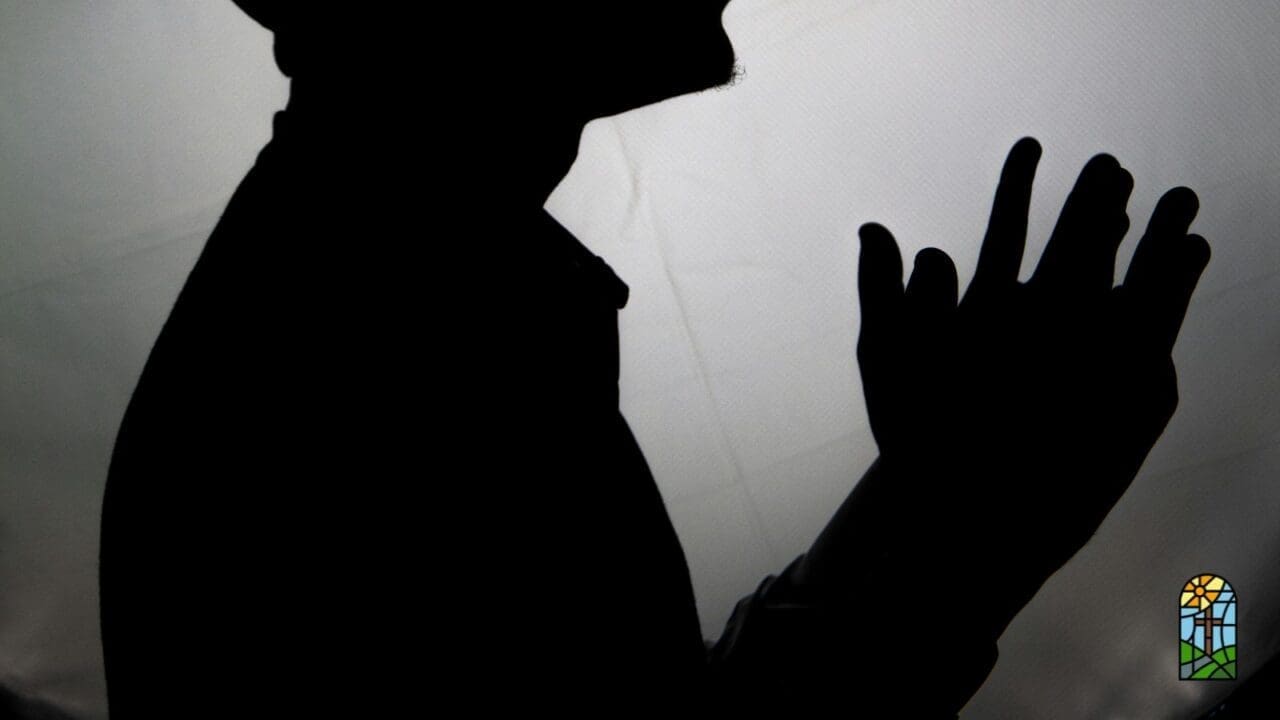
Henri Nouwen, in his book With Open Hands, explores this idea of how we pray. He says that we often come to God in prayer with clenched fists, clutching what we want, what we fear, what we demand.
He says that prayer is really the slow, and sometimes difficult, work of opening our hands. When Jesus says, “ask in my name,” it’s more about receiving on His terms, rather than demanding on ours.
But that means we need to release control, and trust that God really has overcome it all. And that can be a scary place for us.
So Nouwen suggests a prayer something like this:
“Dear God, I am so afraid to open my clenched fists! Who will I be when I have nothing left to hold on to? Who will I be when I stand before you with empty hands? Please help me to gradually open my hands and to discover that I am not what I own, but what you want to give me.”
This all really starts digging into the core of who we are, and Whose we are.
Our prayers become less about what we want and more about aligning ourselves with His heart.
It looks like the Lord’s Prayer prayed slowly, rather than being recited quickly without even thinking about it:
Our Father, who art in heaven,
hallowed be thy Name,
thy kingdom come,
thy will be done,
on earth as it is in heaven.
In fact, when we get to that point in the prayers today, I’d like to slow the pace so that we can marinate in it just a little longer.
conclusion
The ancient Rogation tradition had a beautiful practice where the congregation would physically walk the parish boundaries together, stopping to pray, and asking God for what was needed.
It wasn’t a magic ritual.
It wasn’t a performance.
But it was a whole community, together, opening their hands to receive from the Lord.
And that’s what Jesus is inviting us into today. Not a better prayer technique, or more confidence, or more discipline, or more feeling.
Just open hands.
A community that walks and asks and trusts together.
The victory is already won. The peace is already given. And the Father is already leaning toward us.
Let us pray.
Lord of all good desires, we come to you this morning with open hands. Not demanding. Not performing. Just asking, in the name of the one who has already overcome, that you would receive us as we are, form us as you will, and send us out as doers of your word. Amen.

0 Comments